Clinic management software for the part that pays the bills
Most clinic software manages records. DentClosers manages revenue: every lead, conversation, consultation, and treatment plan — with the team roles to run it.
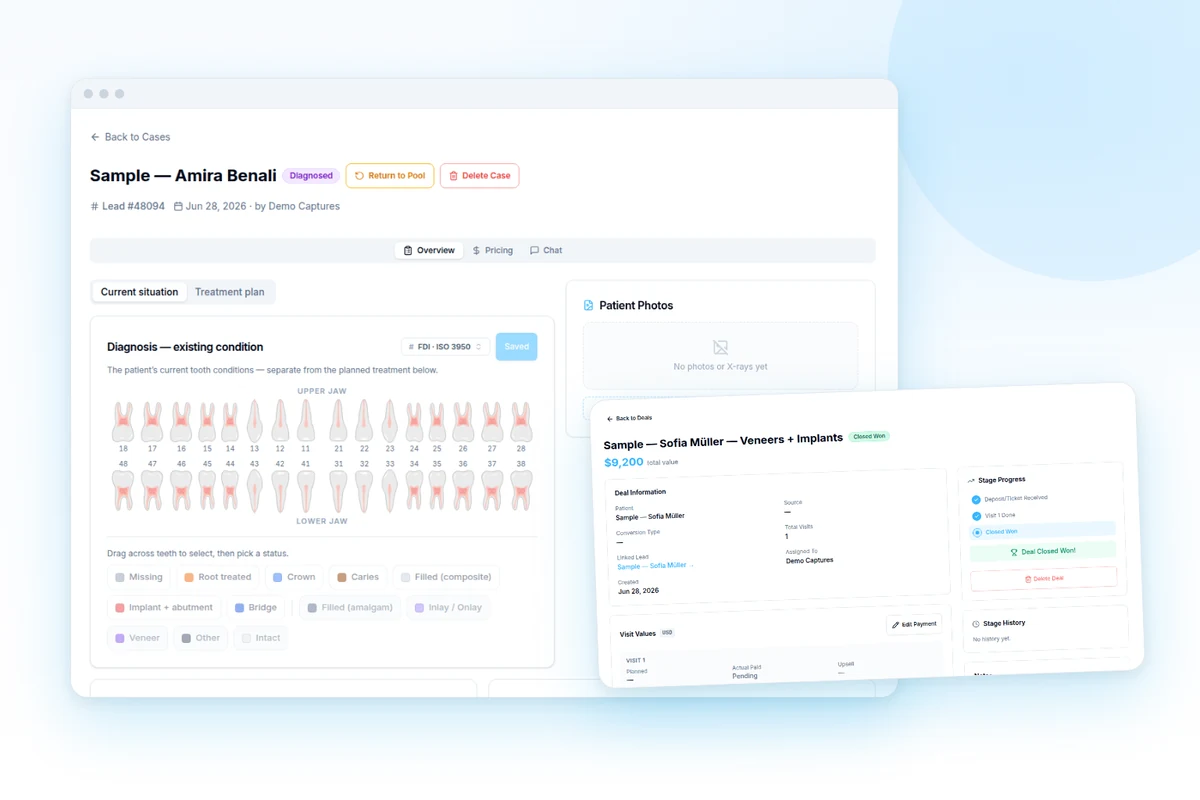
Sound familiar?
Leads in a sheet, chats on phones, plans in Word, bookings in a calendar — and the owner asking why numbers don't match.
Processes live in people's heads. When the process is in the software, day two looks like month two.
Who's arriving, who needs a follow-up, which deposits are pending — assembling 'today' takes half the morning.
This is what your team
works in every day.
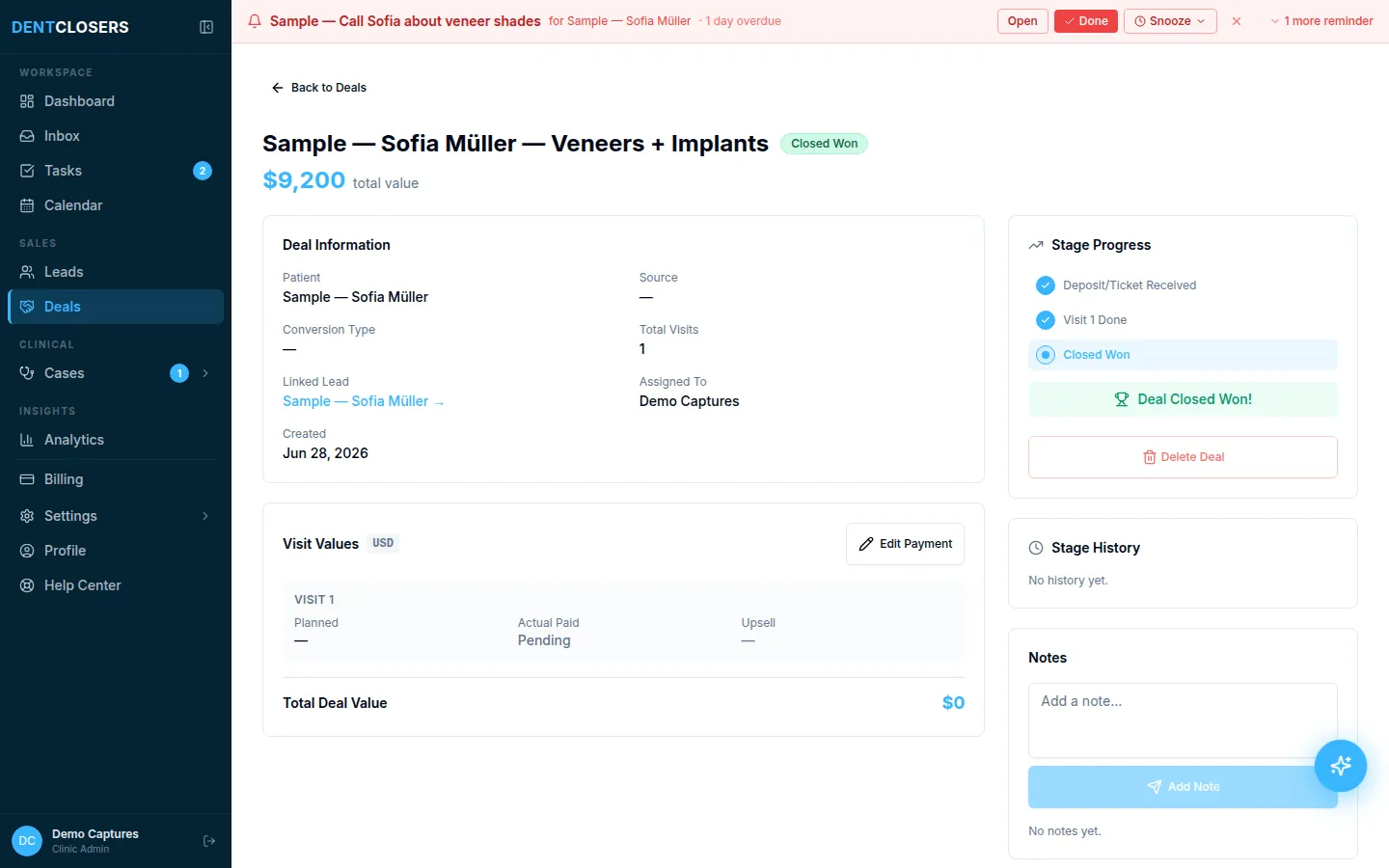
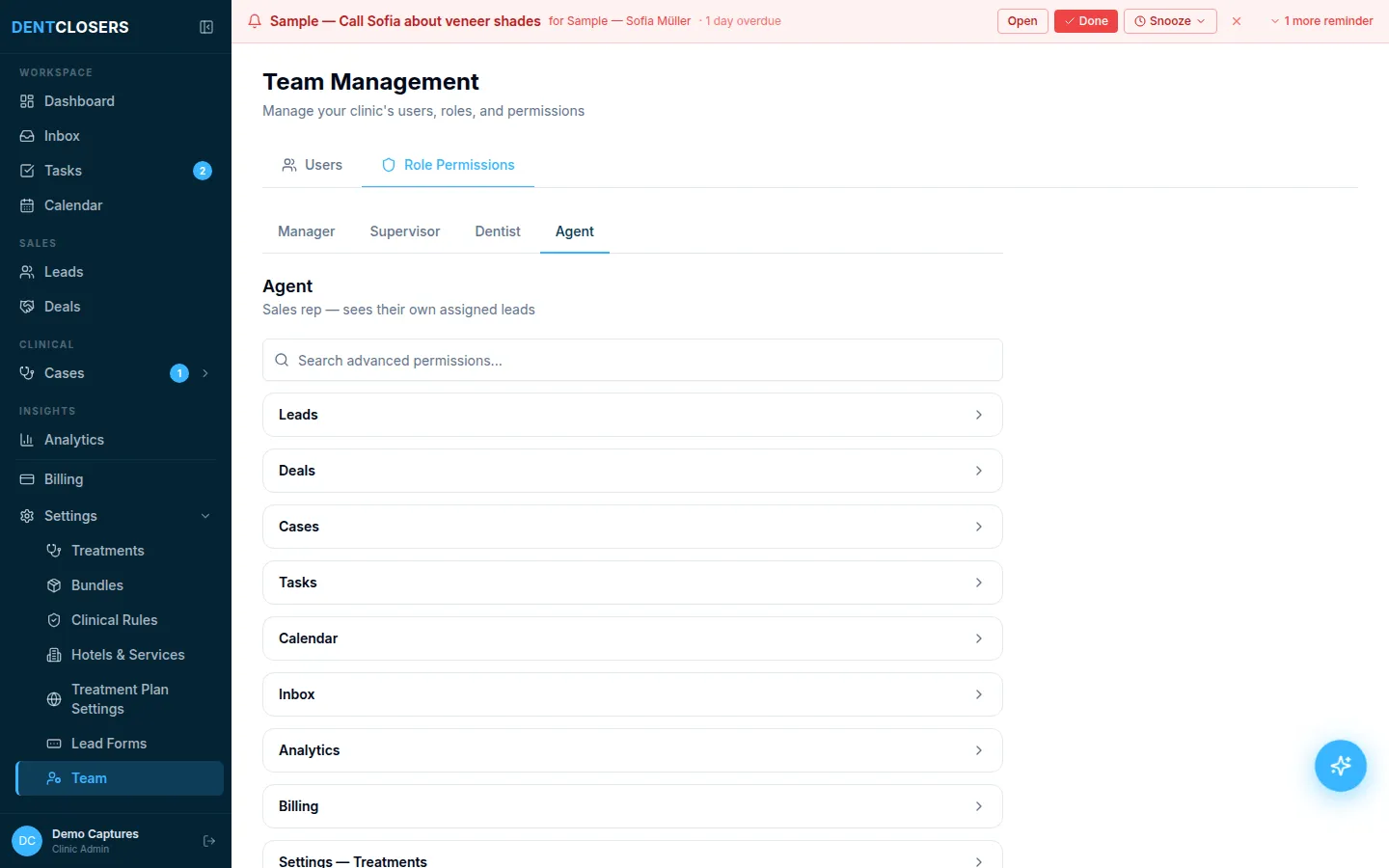
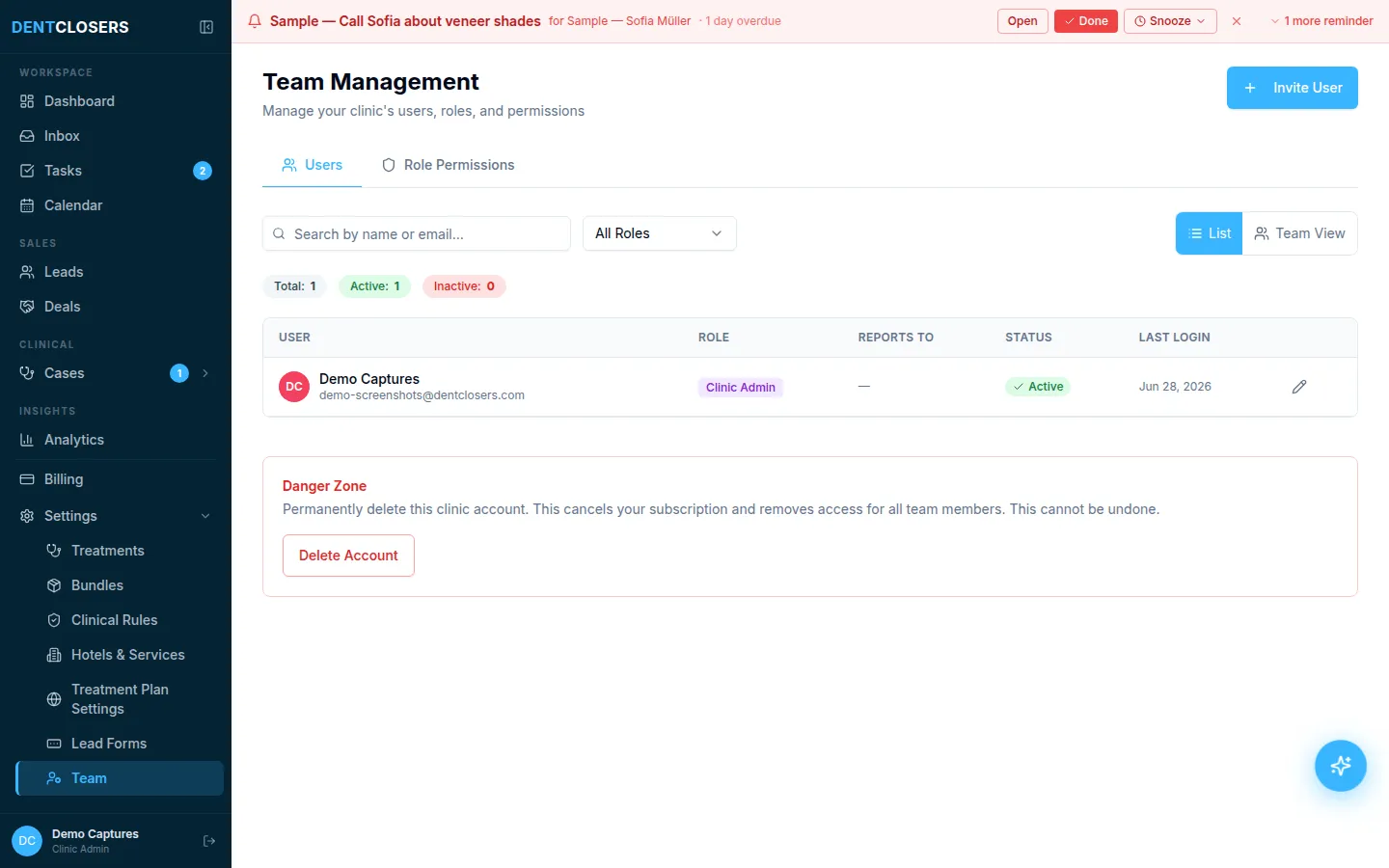
The whole patient journey, one screen. Lead → consultation → treatment plan → deposit → visit — one record from first ad click to completed treatment, with a visual journey map.
Real, untouched product screenshots — shown in your language.
What DentClosers does about it
My Day for every role
Each teammate opens a day view of exactly what needs them: appointments, follow-ups due, patients in the clinic, tasks.
Appointments and visit flow
Book appointments, track per-appointment status through the visit ladder (arrived, in room, done), and keep multi-visit treatments organized.
WhatsApp + email in the record
Patient communication happens inside the system — shared WhatsApp inbox, templated messages, and notifications that actually reach people.
Frequently asked questions
Does it replace our practice management / clinical records system?
No — it complements it. DentClosers runs the commercial and communication side (leads, sales, WhatsApp, plan presentation, visit logistics). Clinical records stay wherever they are today.
How long does setup take?
A clinic is typically live in a day: connect lead sources, import existing contacts by CSV, invite the team, set roles. Guided tutorials cover every workflow in four languages.
Can it handle multiple locations or brands?
Each clinic gets its own workspace with its own team, pipeline, pricing catalog, and WhatsApp number.
What languages does it support?
The interface runs in seven languages: English, Turkish, Spanish, Arabic, Russian, French and Albanian; patient-facing plan pages translate automatically into the patient's language.
Related reading
We use analytics cookies to improve this site. Cookie Policy