The dental CRM built to close treatment plans
Generic CRMs track deals. DentClosers tracks patients — from the first Instagram lead to the accepted treatment plan — with WhatsApp, tooth-chart diagnosis, and multi-option pricing built in.
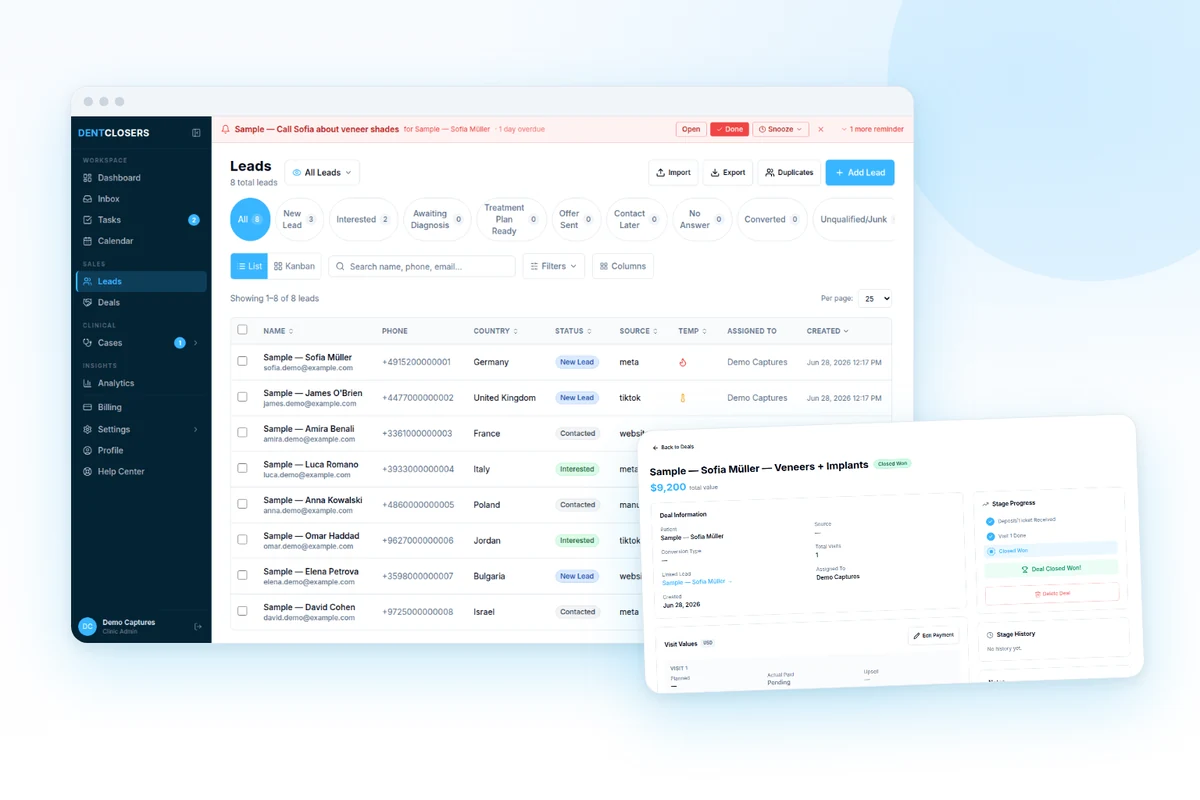
Sound familiar?
Meta form fills get exported weekly, called once, and forgotten. Every lost lead cost real ad money.
You've bent a generic CRM into shape with custom fields — and your team still keeps the real pipeline in WhatsApp and their heads.
Patients who said 'let me think about it' never hear from you again. That's where most treatment revenue leaks.
This is what your team
works in every day.

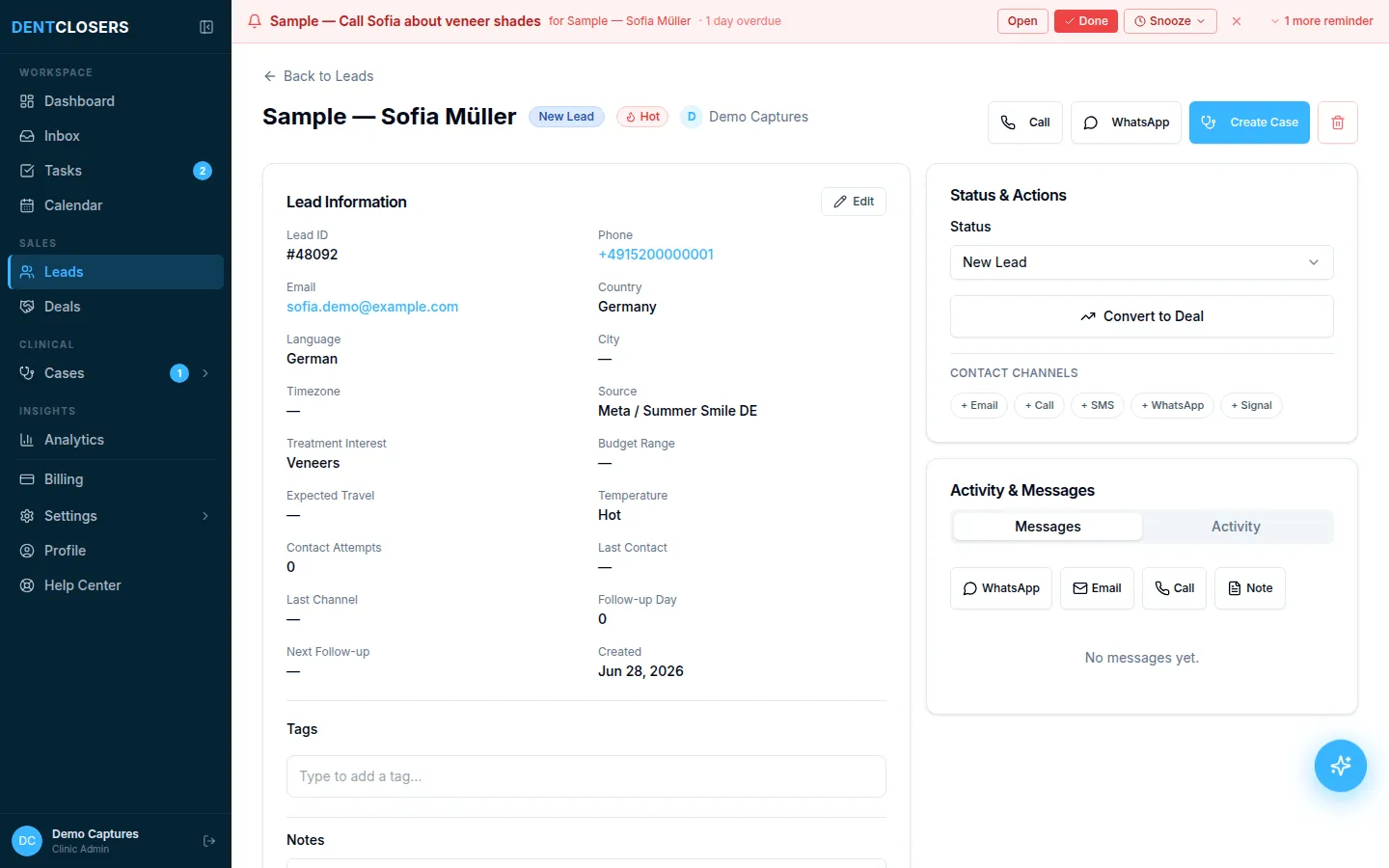
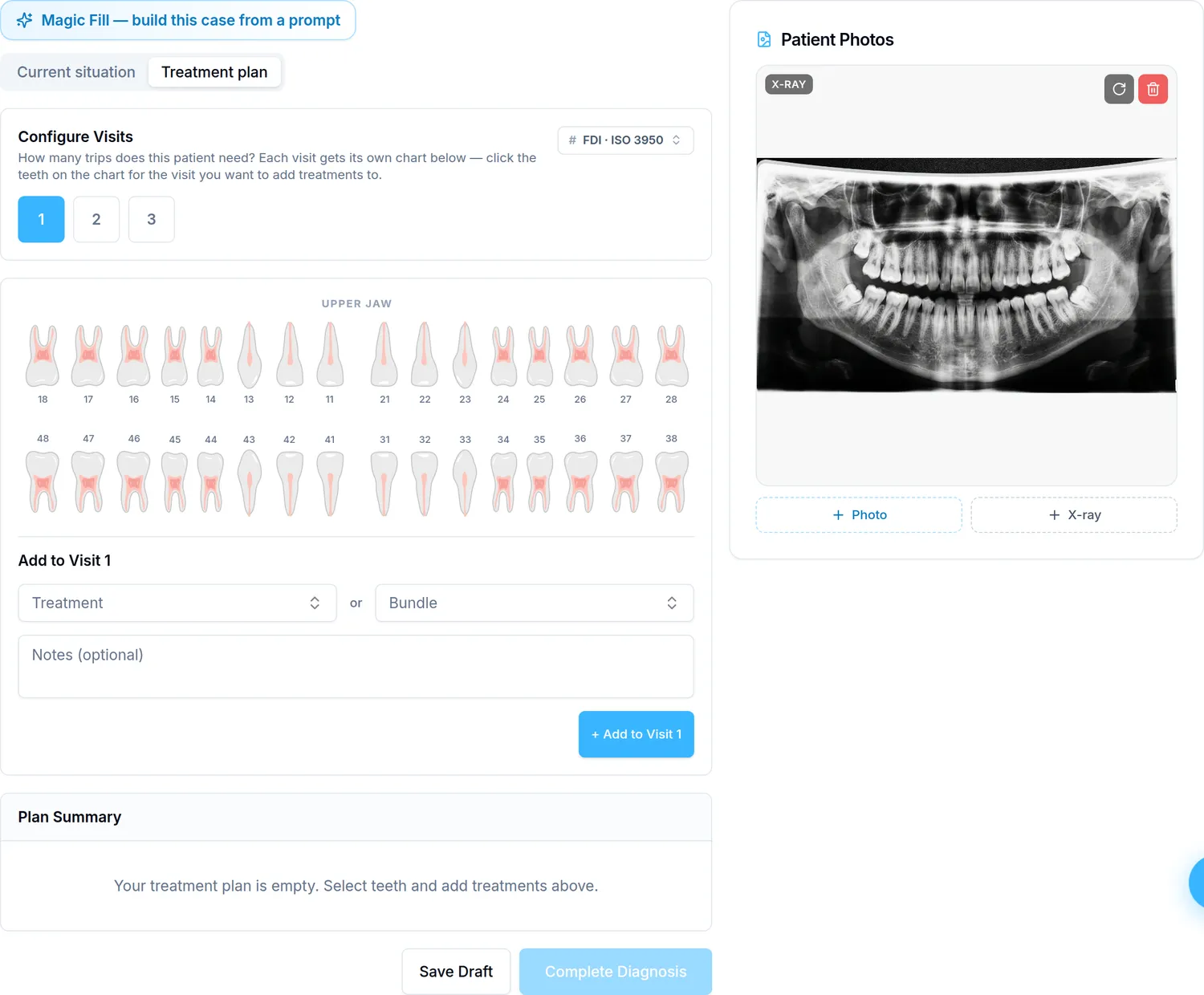
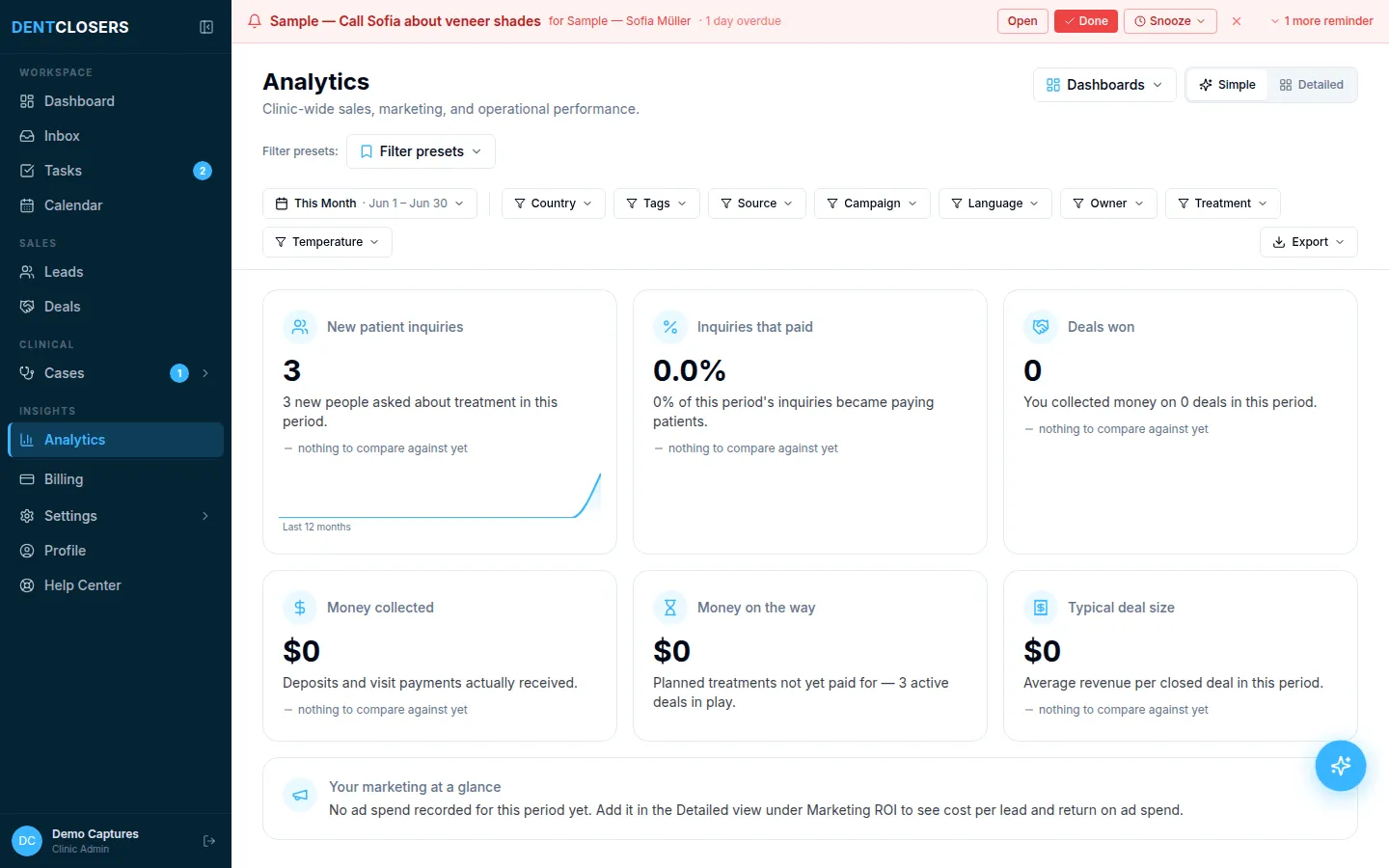
Leads flow in by themselves. Native Meta (Facebook & Instagram) Lead Ads and TikTok Lead Generation webhooks, web forms with consent capture, and CSV import from Zoho, Bitrix24, Pipedrive, or HubSpot — with duplicate detection on every path in.
Real, untouched product screenshots — shown in your language.
What DentClosers does about it
A pipeline that enforces itself
Kanban stages with enforced moves, automatic round-robin assignment to your closers, and a No-Answer ramp that schedules the 2nd, 3rd and 5th attempt so 'no answer' never means 'never called again'.
Follow-up that runs on rails
Cadences, tasks, and a Needs-Attention queue surface exactly which patient to contact next — your team starts the day with a list, not a guess.
What is a dental CRM?
A dental CRM (customer relationship management system) is the software a practice uses to turn enquiries into booked, paying patients. It captures every lead — from Facebook and Instagram ads, TikTok, Google, your website or WhatsApp — moves each one through a pipeline from first contact to accepted treatment, and makes sure somebody follows up on time.
Your practice management software looks after patients once they are in the chair. A dental CRM looks after them before that: the first reply, the consultation, the treatment plan, and the follow-up when a patient says "let me think about it". That is where most practices lose revenue, because the patient books with whoever answered first.
Dental CRM vs. practice management software
Practice management systems such as Dentrix, Open Dental or CareStack run the clinic: clinical charts, appointments, insurance and billing. Their patient-communication tools are built for reminders and recalls of existing patients.
A dental CRM is built for the sale: ad leads arriving in seconds, a shared WhatsApp inbox, a pipeline with follow-up tasks, and treatment plans the patient can accept online. Most growing practices run both side by side, and DentClosers is designed to sit next to whatever PMS you already use, with no migration project.
How DentClosers works, step by step
1. A patient fills in your Facebook or Instagram lead form; the lead appears in DentClosers within seconds and is assigned to a coordinator automatically.
2. The coordinator replies on WhatsApp from the shared inbox. The chat is linked to the lead, so anyone on the team can pick it up, and AI drafts replies in the patient's language for the coordinator to approve.
3. If nobody answers, the No-Answer ramp schedules the next attempts, so a missed call never means a lost patient.
4. After the consultation, the dentist marks the diagnosis on the tooth chart and builds a plan with options and prices. The patient receives a personal plan page they can read on their phone and accept online.
5. The owner sees response times, consultations and accepted plans per coordinator and per lead source on the dashboard.
Who it is for
DentClosers fits dental practices and clinics that actively sell treatment — implants, All-on-4, veneers, smile makeovers, orthodontics — and get most of their new patients from ads and messaging. It was built first for clinics treating international patients, so it also handles multi-currency pricing, interpreters and travel. If you mainly need appointment reminders for existing patients, your practice management software probably already covers that.
Frequently asked questions
Is DentClosers a practice management system (PMS)?
No — and that's deliberate. DentClosers is a dentist CRM, not a PMS: the sales and patient-communication layer — leads, follow-up, WhatsApp, treatment-plan presentation. It runs alongside whatever you use for clinical records and scheduling (Dentrix, Open Dental, or anything else), so you can adopt it without a migration project.
Can we import our leads from Zoho, Bitrix24, or Excel?
Yes. There's CSV import with field mapping, plus dedicated import paths for Zoho and Bitrix24 exports including notes. Duplicates are detected and blocked on the way in, and every import can be undone.
How much does it cost?
Per user per month: Standard $59 ($49 billed yearly) and Professional $79 ($65 billed yearly), which includes the WhatsApp team inbox. Full details on the pricing page. Every plan starts with a free trial, no credit card required.
How long does it take to set up?
Most clinics are working in it on day one: connect your Meta lead forms, connect your WhatsApp number, and import existing leads from a spreadsheet, Zoho or Bitrix24. The AI-assisted import maps your columns for you, and every import can be undone.
Will my team actually use it?
The daily screen is built for the coordinator, not the owner: it opens on who to contact next. Each user sees only their own leads unless their role allows more, and the interface runs in seven languages: English, Turkish, Spanish, Arabic, Russian, French and Albanian.
Does it only work for dental tourism clinics?
The tooth chart, multi-currency plans, and trip logistics were built for clinics treating international patients, but the CRM core — lead capture, pipeline, WhatsApp, follow-up — fits any dental clinic that actively sells treatment.
Related reading
We use analytics cookies to improve this site. Cookie Policy