A patient who asked for a quote is not asking for a document. They're asking: can I trust you with my face, in a country I've never visited? The format of your answer matters as much as the price.
Why PDF quotes underperform
- They look identical to your competitors' PDFs (often the same template).
- No prices-by-option — one number, take it or leave it.
- Unreadable on the phone where 80% of patients open them.
- You can't see whether the patient even opened it.
What converts instead
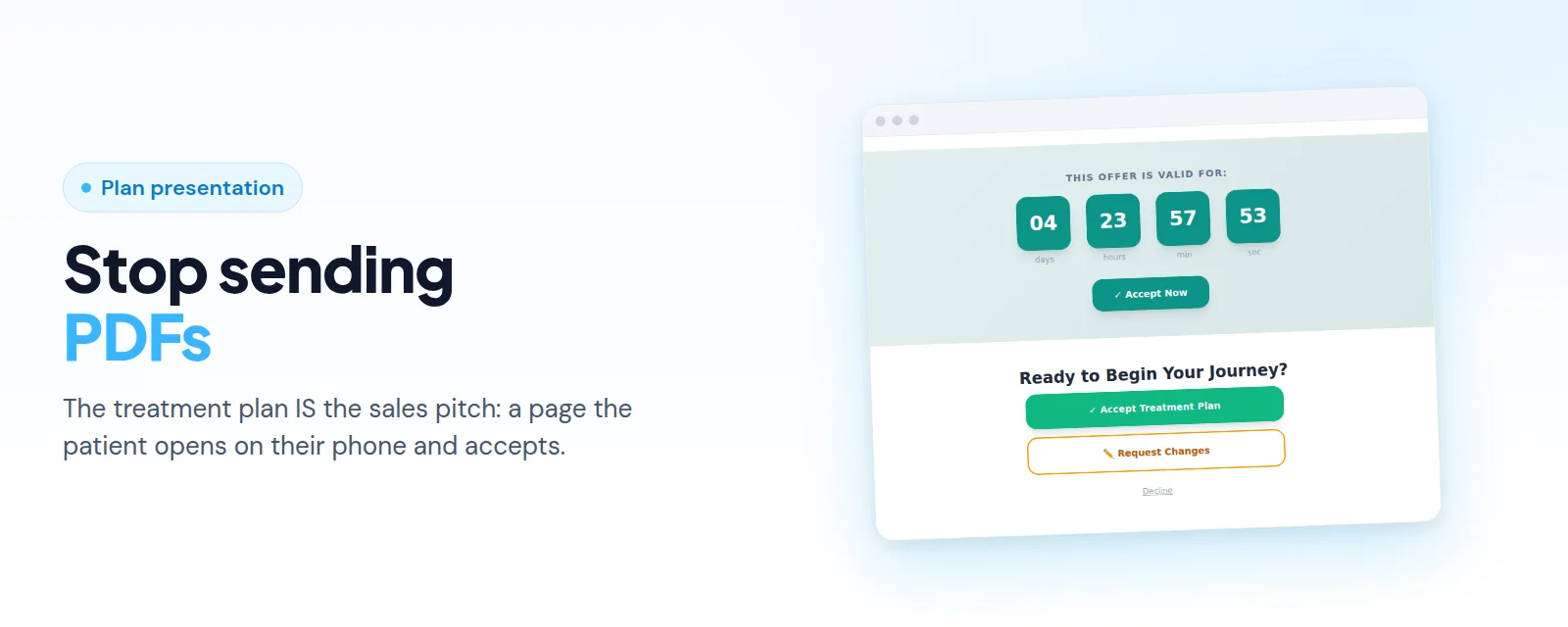
A web page, not an attachment. Branded, mobile-first, in the patient's own language, showing the tooth-by-tooth plan, the visit schedule with hotel and transfer details, your dentists' faces and credentials, real patient reviews — and clear Accept / Ask-a-question buttons.
Options, not ultimatums. Two or three plan tiers (e.g. Standard implants vs. premium brand) shift the decision from "yes or no" to "which one" — a psychological reframing that consistently lifts acceptance rates.
Urgency with integrity. A visible validity window ("this price is guaranteed for 14 days") gives an honest reason to decide.
Instant response handling. When the patient hits Accept at midnight, your team should know by morning — and the deposit conversation should start the same day.
The compounding effect
Each improvement is small; together they change the economics: better presentation → higher acceptance → more reviews → cheaper leads. The clinics dominating dental tourism in Turkey, Mexico, and Thailand in 2026 aren't winning on price — they're winning on the experience between the ad click and the deposit.
DentClosers generates exactly these patient plan pages from your tooth-chart diagnosis — see how it works.
Keep going: how to present All-on-4 and Hollywood Smile prices, 9 tactics that raise case acceptance, and the plan pages patients accept from their phone.
Free template: if you still build plans by hand, start from our dental treatment plan template, with a filled-in example.