Turkey is the reference market of global dental tourism — the one every clinic owner, investor, and competitor benchmarks against. This page collects the numbers that matter, from official and industry sources, with what each one means if you run a clinic serving international patients.
The headline numbers
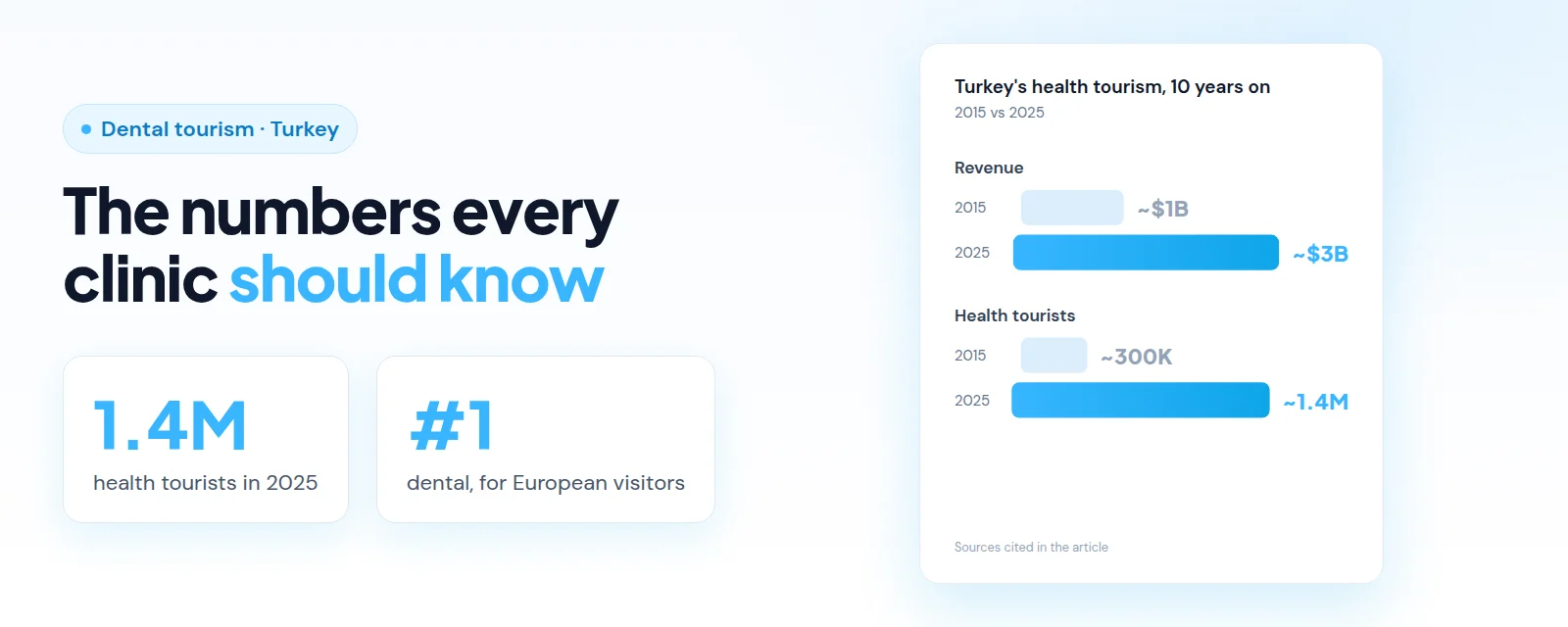
- ~1.4 million health tourists in 2025. Official figures put visitors receiving health services in Turkey at 1,398,580 for 2025, with the first nine months of 2025 alone bringing 1.08 million visitors (Daily Sabah, reporting official data).
- ~$3.0 billion in health-tourism revenue (2025) — up from roughly $1 billion and 300,000 visitors a decade earlier. The market has tripled in ten years.
- Dental is the #1 treatment among European visitors — ahead of hair transplants and cosmetic surgery, the two categories Turkey is stereotypically known for.
- Dental tourism specifically: ~$184 million (2024), projected to ~$532 million by 2033 at a 12.5% annual growth rate (Grand View Research).
What's behind the growth
The price-quality wedge. UK and Western European patients routinely see quotes 50–70% below home prices for veneers, implants, and full-arch work — at clinics whose equipment and materials (Straumann, zirconia CAD/CAM) match what they'd get at home. The savings fund the flights and hotel with room to spare, which is why "Turkey teeth" became a household phrase in the UK — mockery and demand rising together.
Infrastructure built for the patient journey. Istanbul and Antalya clinics industrialized the package: airport pickup, hotel partnerships, translators, treatment plans delivered over WhatsApp. The operational bar for competing is now the journey, not just the chair.
State backing. Health tourism is a named export priority, with USHAŞ (the state health-tourism company) coordinating promotion and accreditation — a structural advantage most competitor countries lack.
What the numbers mean for a clinic
- Volume is rising, but so is competition per patient. With thousands of clinics chasing the same UK/German/French inquiries, the patient who messages you has also messaged four competitors. Conversion speed and language — not clinical quality claims — decide who wins the conversation. That's the machine described in our dental tourism marketing playbook.
- The market rewards operators, not advertisers. The clinics compounding fastest run disciplined speed-to-lead response, per-market campaigns, and treatment plans patients can accept online — the growth rate is real, but it flows to whoever converts it.
- Reputation is the moat. As volume grows, review count and recency on Google increasingly decide the shortlist (reputation guide).
Figures compiled September 2026 from official statistics as reported by Daily Sabah, USHAŞ statements, and Grand View Research market data. Projections are the cited analysts', not ours.
Keep going: how clinics actually convert this demand is in dental tourism marketing, the follow-up discipline in speed to lead, and the operating system behind both in the dental tourism CRM.