"WhatsApp CRM" means two different products, and clinics regularly buy the wrong one. This guide explains how a WhatsApp CRM actually works, the difference between the official API and phone-based hacks, and what to check before connecting your clinic's number to anything.
What a WhatsApp CRM actually is
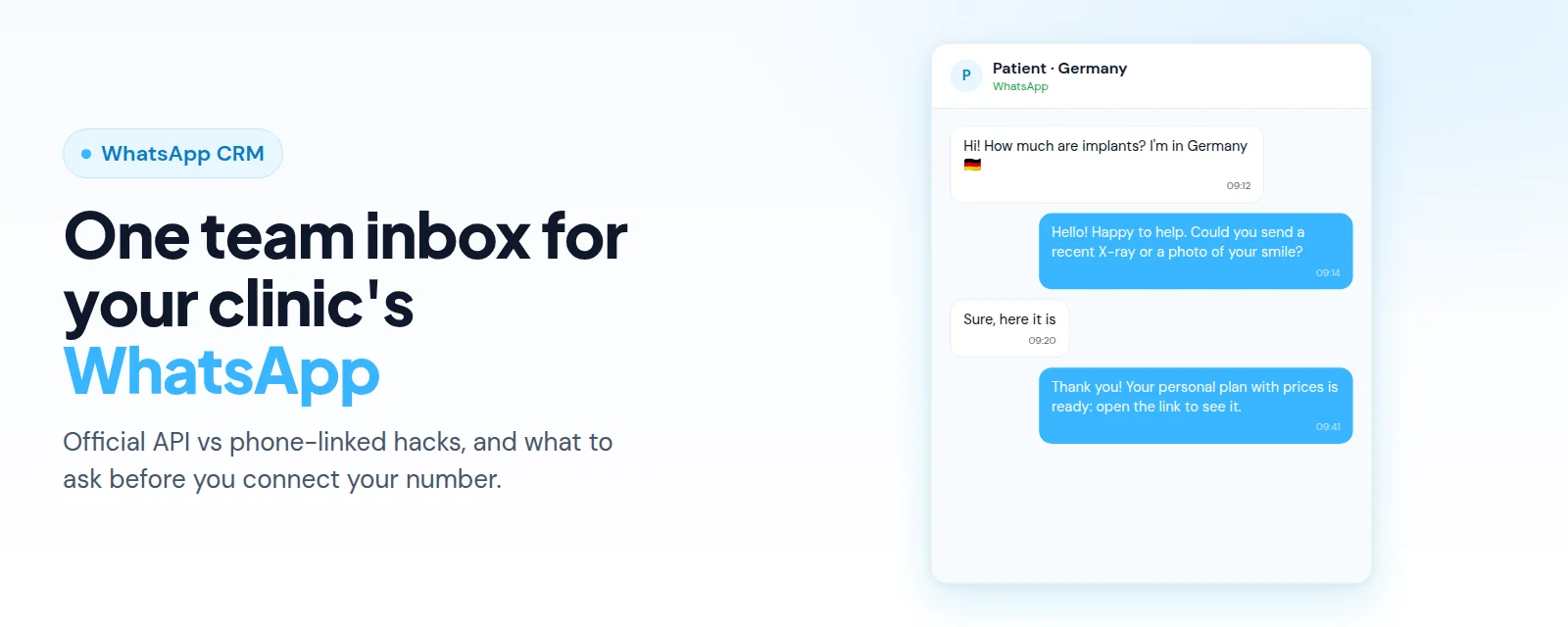
A WhatsApp CRM connects a WhatsApp number to a customer database, so that conversations and records live together. For a clinic that means: a patient writes to the clinic's number, the chat appears in a shared inbox, and it's automatically linked to that patient's lead record — with the plan, notes and follow-up tasks beside it. Anyone on the team can pick up the thread; managers can see every promise made.
The alternative — the coordinator's personal phone — works until it doesn't: vacations, resignations, "which patient was that?", and zero visibility for the owner. If your pipeline lives in one person's pocket, that's the first problem to fix.
Official API vs. phone-linked tools
There are two technical routes, and the difference matters:
The official WhatsApp Business Cloud API (what DentClosers uses). Your number is connected through Meta's own embedded signup. Messages flow through Meta's servers to your CRM. It's stable, multi-user by design, approved for business use, and the clinic keeps ownership of its number. Within the 24-hour customer service window you chat freely; outside it, you use approved templates.
Phone-linked tools (WhatsApp Web automations, "WA blaster" browser extensions, unofficial gateways). They puppet a phone's WhatsApp session. They're cheap and need no approval — and they break without warning, risk the number being banned, and usually can't do real multi-user inboxes. For a clinic whose revenue lives on that number, a ban is an extinction event. Avoid them.
What to look for, in order
- Official API connection with your existing number. You should not have to change the number patients already know.
- Chats linked to records automatically. Matching by phone number, not manual copy-paste. This is the entire point of a WhatsApp CRM.
- A real team inbox. Assignment, handovers, and manager visibility — every coordinator sees their patients, the manager sees everything.
- Language support. International patients write in their language. Look for AI-drafted replies your team can approve — the coordinator answers in English, the patient reads it natively. That's how our inbox handles a Turkish clinic answering a French patient.
- The rest of the sale in the same tool. A WhatsApp inbox alone still leaves the plan, the price and the follow-up somewhere else. The case usually closes when the patient accepts a treatment plan they can open on their phone — from the same conversation.
- After-hours behavior. Auto-replies, canned answers, and a follow-up cadence for chats that go quiet — because the first five minutes decide the case, and most inquiries arrive after closing time.
What it costs
Two components: WhatsApp's own message pricing (since July 2025 Meta charges per delivered template message, by category and the patient's country; replies inside the 24-hour customer service window are free, and so are utility templates sent inside it) and the software. Some vendors bill WhatsApp as an expensive add-on — check this line before comparing prices. In DentClosers, the WhatsApp inbox is included in the plans, and Meta's message fees are what they are, with no markup.
Common questions
Can several people use one WhatsApp number? Yes — that's exactly what the API-based team inbox is for. Simultaneously, with assignment and history.
Will patients notice anything different? No. They message the same number from their normal WhatsApp. Only your side changes.
Is it allowed to message patients first? Outside the 24-hour window you use pre-approved templates (appointment confirmations, follow-ups). Within a conversation the patient started, you chat freely.
What about the coordinator who "owns" the number today? They keep working the chats — in the coordinator workspace, with the record beside the conversation, and the clinic finally owns its pipeline.
The test drive is simple: connect the number, run one week of real conversations through the inbox, and count how many chats got answered faster and followed up on time. That number is the business case.